
Hispanic Heritage Month, recognized from September 15 through October 15, is an opportunity to celebrate the histories, cultures, leadership, and contributions of Hispanic and Latine communities.This year, TCDIP is honored to feature Monica Delgado, Spencer Rojas, Delmar Flynn, and Andrea Mejia. Through their reflections, they share insights about their career journeys, cultural identities, sources of community and support, meaningful professional milestones, and the experiences that have shaped their work in the legal profession.
We invite you to read the full blog post to learn more about our featured attorneys, their perspectives, and the many ways Hispanic and Latine legal professionals continue to strengthen and enrich Minnesota’s legal community.
 Monica Delgado
Senior Associate
Fredrikson & Byron
TCDIP ELG Co-Chair
What communities, mentors, networks, or sources of support have been most meaningful to you throughout your legal career?
My family and friends have been critical in keeping me grounded through the challenges and stress that can come with being an attorney. At all stages of my career thus far, I have been mentored 1:1 and in small groups by others who have also been in various career stages; even now as a senior associate, I have learned just as much from summer associates as I have from senior partners. Broader networks and sources of support are also important. In addition to being an active member of TCDIP, I am involved with the National Employment Law Council – a group of management-side employment attorneys of color from firms and in-house positions across the country. I really enjoy both giving and receiving support—and making lasting friendships—as part of those groups and others.
In what ways has your cultural identity, background, or lived experience shaped your perspective, values, or approach within the legal profession?
I grew up in the only Puerto Rican family in my hometown in Wisconsin. In college, I was lucky enough to study abroad in several different countries, and I was astounded by how “at home” I felt abroad, just because of how people in those places (none of which was Spanish-speaking) pronounced my name: Mónica, like my family says it, which is very distinct from the Midwestern pronunciation of my name. Whether a client has a less common name or a tricky legal issue, I try to meet them where they are and provide a similar baseline level of comfort in my representation as what I experienced abroad. I also am fiercely proud of being from the Midwest, and I try to do my part to bring people with different backgrounds and perspectives together.
What advice or guidance would you offer to students or early-career Hispanic or Latine attorneys entering the legal profession?
Never sell yourself short or close doors on yourself. Reach out to others who have paved the way and come curious and prepared with good questions about their path. Pay it forward when others come to you in the future. Check in periodically with yourself and your closest circle to make sure your career aligns with your values and take action to recalibrate as needed along the way.
What does Hispanic Heritage Month mean to you, particularly within the context of the legal community?
To me, this month is about solidarity and celebration. This profession provides us so much privilege and power, and I think it is important to stick up for each other and for other causes we care about, both by using our technical skills and by using our status as legal professionals in “softer,” but still very impactful, ways. We have all seen very powerful recent examples of this work in Minnesota and beyond. And although the statistics for Latina attorneys in particular are abysmal, I want to celebrate the strength and energy that we bring to our organizations and communities.
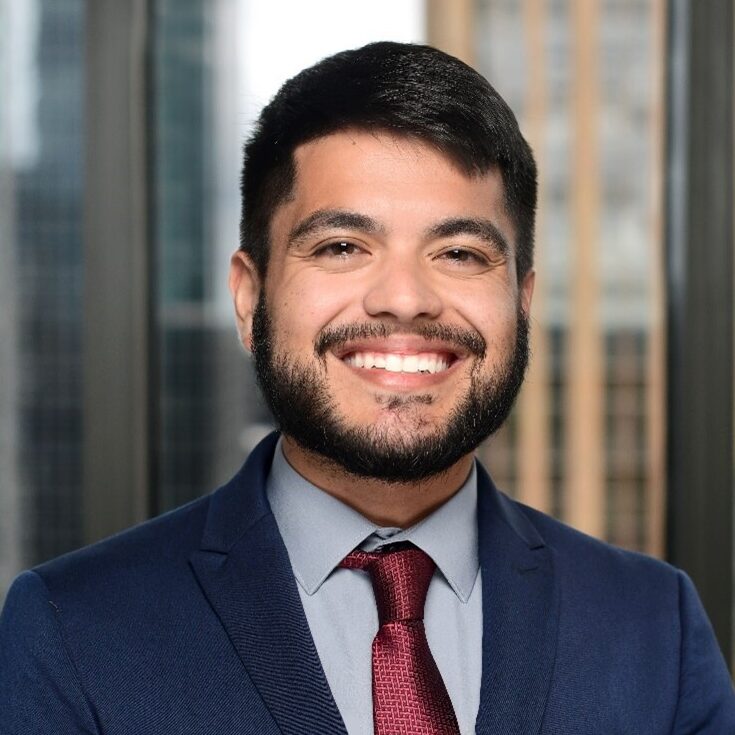 Spencer Rojas
Associate Attorney
Taft Law
ELG Accelerator
Can you share a brief overview of your career journey and what led you to your current role?
I went into law school without a clear vision of what my legal career would look like. A friend a few years ahead of me had participated in TCDIP, and seeing his experience made me want to explore a similar path. Through TCDIP, I had the opportunity to spend my 1L summer at Taft and work with Xcel Energy as my corporate partner. That experience introduced me to energy law and ultimately what I now practice and continue to work with some of the same people I met during that first summer.
In what ways has your cultural identity, background, or lived experience shaped your perspective, values, or approach within the legal profession?
My background has made me particularly conscious of the importance of representation and having a community within the legal profession. It has also reinforced for me that people bring different experiences and perspectives to the same issue, and that those differences can make teams and the work itself stronger. I try to carry that perspective into my practice by being open to different viewpoints and by making an effort to build connections with people whose backgrounds and experiences may differ from my own.
What advice or guidance would you offer to students or early-career Hispanic or Latine attorneys entering the legal profession?
I would encourage students and early-career attorneys to get involved with organizations and affinity groups early and start building relationships before they feel like they “need” a network. The Twin Cities legal community is relatively small, and you will continue to cross paths with many of the same people throughout your career. I also strongly recommend getting involved with TCDIP. Its programs and events have been valuable to me both professionally and personally, particularly because they create opportunities to build genuine relationships with other attorneys of color and other underrepresented backgrounds.
 Delmar Flynn
Attorney
Cambio Family
Current President of the Minnesota Hispanic Bar Association
Can you share a brief overview of your career journey and what led you to your current role?
I began my career in family law as early as the summer before law school when I interned for the Broward County Public Defender’s Office in Florida assisting youth in juvenile delinquency proceedings. I truly committed to children during my externship in law school with the Cook County Public Guardian’s Office in Chicago by representing abused and neglected children. I then took my passion defending the underrepresented to a legal aid position assisting homeowners during the mortgage foreclosure crisis in 2010. When my husband and I relocated to Minnesota, I immediately volunteered pro bono for the Children’s Law Center and finally landed a secure position in family law. Now I partly own and proudly practice at Cambio LLC, offering representation and dispute resolution for all families going through their own unique Cambio in and around the court system.
Community & Support: I honestly believe the Minnesota Hispanic Bar Association has been the most meaningful community and support for my legal career. This is why I joined the MHBA Board. Spending time with other Latinos feels like home, but it’s our shared passion for elevating the Minnesota Latine legal and greater communities which truly provides me with community and support. I am so proud of the work the MHBA Board accomplished during Metro Surge, for example. MHBA members have my back, too, so I always feel like I have someone to lean on through professional challenges and opportunities for growth.
Cultural Identity & Perspective: My cultural identity and background add depth to my approach within the legal profession because through my native Spanish language skills I can positively impact more families. I am Mexican by birth and I grew up in a multigenerational home so I truly understand the immigrant experience, which helps me advocate better for immigrant families. Who I am and where I come from allows me to serve Minnesota uniquely and powerfully.
 Andrea Mejia
Attorney
Sapientia Law Group
Former President of the Minnesota Hispanic Bar Association
Can you share a brief overview of your career journey and what led you to your current role?
I was born and raised in Bogota, Colombia. I attended law school in Colombia and practiced law there for about 6 years. I came to Minnesota in 2016 to pursue an LLM at St. Thomas and then decided to continue with the JD program at the same law school, graduating in 2019. I currently practice business litigation at Sapientia Law Group and am working to expand the firm’s international practice.
What communities, mentors, networks, or sources of support have been most meaningful to you throughout your legal career?
I attended the University of St Thomas Law School. Through their mentorship program, I was able to connect with different types of mentors, such as professional mentors, some of whom today help me resolve questions about law, community or relationship mentors, who have connected me to different individuals in the legal community, and the friends and mentors I have met in my years with the Minnesota Hispanic Bar Association. All these individuals have helped me in different ways. I believe that every person needs different advisors or mentors and should not leave it to one single person or community for support.
What is a challenge you have faced navigating the legal profession, and what did you learn from that experience?
One of the main challenges is the lack of diversity in Minnesota’s legal profession. We must keep fighting and investing in diversifying the profession because Minnesota is becoming more diverse, and the profession cannot fall behind. We need to invest in people from different states and countries, with different perspectives, and give them opportunities to stay. The need for diverse legal representation is clear; we need attorneys to meet this demand.
What does Hispanic Heritage Month mean to you, particularly within the context of the legal community?
Hispanic Heritage Month celebrates our community’s many contributions, reminds us not to forget them, and gives us a chance to reflect on the work that remains. It also reinforces the importance of staying true to our cultural background and experiences to better advocate for our community. Most importantly, it underscores the need to invest in a more diverse profession that reflects the people we serve.