
Native American Heritage Month, celebrated in November, is an opportunity to celebrate the histories, cultures, leadership, and contributions of indigenous people in Minnesota and throughout the country. This year, TCDIP is honored to feature Casey Matthiesen, Veronica Newcomer, Arielle Wagner, and Tom Pack. Through their reflections, they share insights about their career journeys, cultural identities, sources of community and support, meaningful professional milestones, and the experiences that have shaped their work in the legal profession.
We invite you to read the full blog post to learn more about our featured attorneys, their perspectives, and the many ways Native legal professionals continue to strengthen and enrich Minnesota’s legal community.
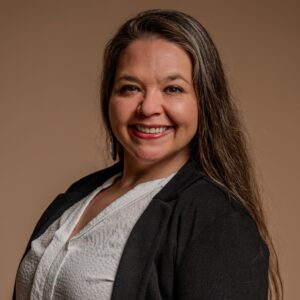 Veronica Newcomer
Deputy General Counsel
White Earth Band of the Minnesota Chippewa Tribe
Can you share a brief overview of your career journey and what led you to your current role?
My position with the White Earth Nation began during law school through a volunteer clinic hosted at the White Earth Tribal Court in 2011 and then an MJF summer clerkship with the Tribal Court in 2012. Right around graduation from William Mitchell College of Law in 2013, I began doing contract work for the Tribe while studying for the bar exam. After passing the bar, I officially joined White Earth as a full-time attorney, and over the past 13 years, I have served the Nation in various capacities, most recently as Deputy General Counsel.
What inspired you to pursue a career in law?
Realizing I wasn’t fully utilizing my undergraduate degrees in American Indian Studies and Communication Studies, I decided to take the LSAT and pursue law school. I retook the exam to improve my score, applied to William Mitchell College of Law, and decided to give it a shot. That first semester was tougher than I anticipated, and I debated sticking with law school until I connected with the Native American Law Students Association (NALSA), the National NALSA, and the Minnesota American Indian Bar Association (MAIBA). Connecting with those organizations gave me the support I needed to get through law school and into practice.
What communities, mentors, networks, or sources of support have been most meaningful to you throughout your legal career?
Finding my community in the NALSA at William Mitchell, as well as joining the National NALSA Board, was essential to navigating law school. Joining the Minnesota American Indian Bar Association (MAIBA, now known as the Minnesota Native American Bar Association (MNABA)) as a student provided me a space to belong within the broader legal community. Today, serving as President of the MNABA allows me to keep that supportive momentum going and ensures Native voices are present in decision-making spaces.
What is a challenge you have faced navigating the legal profession, and what did you learn from that experience?
Early in my career (and still to this day), I dealt with a lot of imposter syndrome, not only as an attorney but also as a Native American. The list of comparisons can feel endless and daunting. What I learned through navigating those feelings is that you must disregard the static, focus on what is within your control, and recognize that no one else is “you,” so no one is qualified to judge your journey. Embracing that mindset allows me to step into rooms with more confidence and sharper focus on what I am here to do.
In what ways has your cultural identity, background, or lived experience shaped your perspective, values, or approach within the legal profession?
Growing up as an Army brat for the first ten years of my life, my connection to my tribe (I’m enrolled Turtle Mountain Band of Chippewa Indians) came primarily through my family rather than living directly in Belcourt, ND. Despite that connection, the responsibility I feel to my community anchors me and drives my desire to promote Tribal communities. I embody what I know about my culture and values in my daily work serving the White Earth Nation, protecting tribal sovereignty, and fighting for accurate representation. Accurate representation ensures true access to justice, and having Native attorneys in these spaces ensures our communities are genuinely understood.
What does Native American Heritage Month mean to you, particularly within the context of the legal community?
Native American Heritage Month is an opportunity to highlight the essential contributions of Native legal professionals and reinforce the importances of representation. It serves as a reminder to reflect on where we have been, honor the mentors who opened doors for us, and keep building networks for the next generation. It is also a call to action to ensure Native attorneys are present where our perspectives have historically been missing.
What advice or guidance would you offer to Native American, Alaska Native, or Indigenous students and early-career attorneys entering the legal profession?
Remember that when you step into new spaces, so many people are willing to welcome you, help you, and ensure you understand what is going on. Lean on your community, own your unique journey, and strive to make an even bigger impact than those who came before you. Your input, guided by your experiences, is valuable.
Increased Native representation across the legal profession is vital to the practice of law and access to justice. My goal for the legal profession is for it to be an accurate representation of all of us. My hope is that future Native lawyers look at anyone’s journey and feel inspired. There may be times it is a little intimidating but that makes the outcome unbelievably rewarding when it works out.
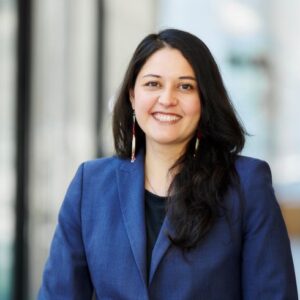
Arielle Wagner
Lockridge Grindal Nauen
TCDIP Board Member
What communities, mentors, networks, or sources of support have been most meaningful to you throughout your legal career?
Getting involved in organizations like the Minnesota Native American Bar Association and TCDIP early on in my career us helped me both professionally and personally. I built so many genuine relationships and friendships as a young attorney that continue to this day. I’ve found a sense of community and mentorship.
In what ways has your cultural identity, background, or lived experience shaped your perspective, values, or approach within the legal profession?
The values that I was taught growing up on the reservation continue to guide me in my practice today: listen carefully, speak up only when you have something to say, and communicate with respect. Although I don’t speak much Anishinaabemowin, the lessons inherent in the language have stayed with me. For example, there’s no words in for “please” or “sorry” in Anishinaabemowin because it’s a given that you’re speaking respectfully and listening to what others have to say. This helps me advocate thoughtfully and carefully in my practice.
What is a challenge you have faced navigating the legal profession, and what did you learn from that experience?
One challenge is that I’m often the only Indigenous attorney in the room, which can feel like I’m speaking for all Native American attorneys. Some of my cases involve Indian law, where I’m usually fortunate to have other Native attorneys to work alongside. But that’s not the case with most of my other cases. But the experience has taught me how to build connections and remain confident in my perspective.
What advice or guidance would you offer to Native American, Alaska Native, or Indigenous students and early-career attorneys entering the legal profession?
I would encourage students and attorneys to get involved with organizations like TCDIP and the Minnesota Native American Bar Association. There are still so few of us who practice law: building those connections helps us all collaborate and have a stronger support system. It also provides leadership opportunities and make sure our communities are represented.
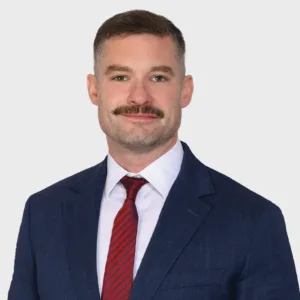 Tom Pack
Faegre Drinker
Can you share a brief overview of your career journey and what led you to your current role?
During law school, I thought I might want to practice federal Indian law. But once I started at a large law firm in San Francisco, I really loved working in other areas of civil litigation and eventually settled on a life sciences practice with a significant product liability defense component. I moved to the Twin Cities for my husband’s job, had a couple of zig-zags, and I eventually landed at Faegre Drinker as a product liability and mass torts partner. My husband and I moved back to San Francisco, but I spend a lot of time in the Twin Cities for various reasons and miss a lot of things about living there!
What inspired you to pursue a career in law?
I’ll be brutally honest: I grew up in a financially unstable household—my dad graduated from college the year I started college—and I remember how much of an emergency it was when our paper food stamps did not arrive on time in the mail. In college, I vowed that I would never, ever live like that again. Law was a way I could use my brain, help clients and my community, and make a secure living for myself.
What communities, mentors, networks, or sources of support have been most meaningful to you throughout your legal career?
There have been so many! I can’t name all of the people who invested in me via mentoring, but there have been many. In terms of networks, I tell junior lawyers that it’s important to find your professional “crew” who will support and inspire you. For me, that has been a combination of the National LGBTQ+ Bar Association, Minnesota Lavender Bar Association, National Native American Bar Association, and Minnesota Native American Bar Association. I remember one meeting of queer Native lawyers at the National Native American Bar Association’s annual meeting and I never felt so seen and comfortable as a lawyer as I did in that room.
What is a professional milestone or accomplishment you are especially proud of?
One of the last conversations I had with my father before he passed away was calling to tell him I had been admitted to what was then my top choice law school. He was at work, and I remember him pulling the phone away and screaming the news to all of his coworkers in the Indian Health Service pharmacy he was working in. I was devastated when he subsequently passed away, but hearing the pride and true joy in his voice is one of the most important memories I have.
Is there a case, issue area, or aspect of the law that feels especially meaningful to you as a Native attorney?
For me, treating the law as “meaningful” is complicated. The law is both the source of our protection and a record of our subordination. Our sovereignty is older than the Constitution, which recognizes it, yet federal law has long treated that sovereignty as something Congress may limit at will. The Declaration of Independence, in the same breath as its ideals of liberty, calls us “merciless Indian Savages.” And of course, the government imposes definitions on being Native that are contradictory and culturally insensitive. I find meaning in confronting that tension directly instead of pretending it has been resolved.
What is something you appreciate or find special about the Twin Cities legal community?
Especially since I move between the legal communities in the Twin Cities and San Francisco, I really appreciate that the Twin Cities legal community is relatively modest in size. When opposing counsel asks for an extension, you’re going to run into that person in the skyway or at a bar event, and so you shouldn’t have sharp elbows or be unnecessarily obstinate. It makes for a pleasant experience in the practice of law, as those common courtesies and a collegial environment—which are expected in the Twin Cities—are not a given elsewhere.
What advice or guidance would you offer to Native American, Alaska Native, or Indigenous students and early-career attorneys entering the legal profession?
Find your crew. You’re not alone. Lawyering isn’t a great solo sport. And I think our affinity bar organizations in particular are a great place to find that crew.
 Casey Matthiesen
Faegre Drinker
What inspired you to pursue a career in law?
I was drawn to the legal profession because I’ve always enjoyed advocating for others, asking difficult questions, and challenging the status quo. As I embraced my Native American heritage, I also understood that the law has played an enormous role in shaping the history and future of our communities. Becoming an attorney offered an opportunity to have a voice in a profession where decisions can have lasting consequences for individuals and minority communities.
What communities, mentors, networks, or sources of support have been most meaningful to you throughout your legal career?
The Minnesota Native American Bar Association has been one of the most meaningful communities since I moved to Minneapolis for law school. What began as an opportunity to connect with other Native legal professionals evolved into lasting friendships, mentorship, and eventually serving as the organization’s president. I’ve been fortunate to learn from attorneys and judges who generously share their experiences and want to see the next generation succeed.
What is a challenge you have faced navigating the legal profession, and what did you learn from that experience?
Early in my career, I learned the importance of building relationships, seeking out mentors, and becoming comfortable advocating for myself. I’ve also learned that you do not need to follow someone else’s blueprint for success, and that bringing a different perspective to the table can be an asset rather than something to minimize.
What does Native American Heritage Month mean to you, particularly within the context of the legal community?
To me, Native American Heritage month is an opportunity to recognize not only the history and contributions of Native people, but also the work that remains to create opportunities for future generations. Within the legal profession, that means supporting our students, building meaningful mentor relationships, and ensuring that Native perspectives are represented in conversations that affect our communities. I hope the month encourages people to continue those efforts throughout the year.
What is something you appreciate or find special about the Twin Cities legal community?
What I appreciate most is how accessible and supportive it is, particularly when it comes to mentorship and professional involvement. I’ve had the opportunity to build meaningful relationships with attorneys, judges, and community leaders at every stage of their careers. It is a community where people are willing to invest in one another, and I have benefited tremendously from that generosity.